
Temperature Sensing in Metrology
Precision sensing elements — trusted by calibration labs and standards institutes worldwide
In the world of metrology — the science of measurement — precision is everything. From national laboratories to industrial calibration, maintaining the accuracy of temperature instruments depends on reliable reference elements.
This is where TDI plays a vital role: supplying the temperature sensing elements — such as wire-wound Pt100s and high-specification RTDs — that form the heart of reference thermometers used to calibrate others.
Rather than offering complete thermometer systems, TDI provides the core components that world-class calibration devices are built around. Whether you're a student researcher or a manufacturer of premium laboratory instrumentation, you can rely on TDI sensing elements for stability, traceability, and accuracy — including options conforming to Class B, Class A, ⅓ DIN, ⅕ DIN, ⅒ DIN, W0.3, W0.15, W0.1, ½ Class A, ⅓ Class A, ⅕ Class A.
Example Applications
Calibration Laboratories & National Standards
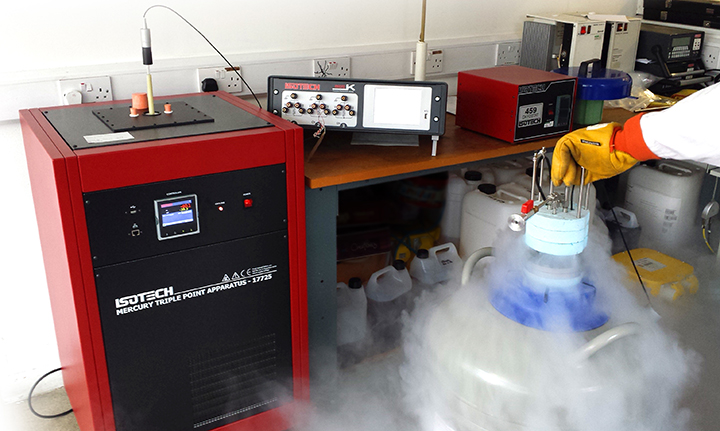
Primary ApplicationReference-grade sensors — often based on precision RTDs like TDI's wire-wound Pt100s — are immersed in stable temperature baths alongside the device under test. These sensors provide the stable, traceable measurements needed to adjust industrial sensors to match known values.
Used by leading national metrology institutes and commercial calibration labs alike, TDI sensing elements are built for repeatability, with uncertainties as low as ±0.01 °C when paired with appropriate instrumentation and practices.
Key Benefits:
- Long-term stability for consistent calibrations
- Traceability to international temperature standards
- Low drift characteristics over extended periods
- Excellent repeatability for multiple calibration cycles
Cross-Industry Quality Control
IndustrialFrom aerospace and electronics to food safety and pharmaceuticals, calibrated temperature sensors underpin compliance and performance. Industries rely on calibration labs to verify that their sensors — whether built into autoclaves, climate chambers, or test rigs — are operating within acceptable tolerances.
The sensors doing this verification must be dependable. TDI's temperature sensing elements are chosen by OEMs and metrology specialists for their outstanding long-term stability and ability to meet strict uncertainty budgets.
Industry Applications:
Construction, Types, and Tolerances
For superior performance, all TDI detectors use the partially supported wire-wound construction. A precision coil of platinum wire is inserted into axial holes in a high-purity alumina rod. A small amount of glass adhesive secures parts of each turn after firing, allowing most of the wire to remain free-moving for expansion and contraction.
This unique approach ensures excellent long-term stability, and the finished element can withstand up to 30G of vibration without damage. These sensors operate reliably from -200 °C to +800 °C and tolerate excursions up to 1100 °C without permanent degradation.
TDI Types Available
All TDI detectors are wire-wound platinum resistance types, ceramic housed and known by many names including PRTDs, RTDs, Pt100s, and temperature detectors.
We offer detectors with nominal resistances of Pt25, Pt100, and Pt1000 — but custom values between 1 Ω and 1000 Ω are also available.
All products comply with EN 60751 standards and are built to exceed the expectations of demanding applications.
TDI Tolerances
While EN 60751 specifies Class A and Class B tolerances, many customers require even tighter specifications. TDI routinely selects and supplies elements meeting:
- 1/10th DIN for ultra-high precision
- 1/3rd DIN for advanced reference-grade use
- W0.1, W0.15, and W0.3 for specialist calibration
All sensors are individually tested and selected to outperform the nominal tolerances required by international standards.
Refer to the full TDI catalogue for detailed specifications and selection charts.
Why Calibration Professionals Choose TDI

Wire-Wound Precision
Our traditional wire-wound construction provides superior stability and accuracy compared to thin-film alternatives, essential for reference-grade applications.

Over 40 Years of Experience
Our highly skilled team are experts in all aspects of manufacturing, with deep experience across the process.

Long-Term Stability
Minimal drift over extended periods ensures your calibration standards remain accurate and traceable for years of reliable service.
Calibrated Standards
We work with Isothermal Technology (Isotech) to calibrate our standards — they offer the lowest calibration uncertainties of any privately owned company.
“World-leading manufacturers of platinum resistance thermometers trust TDI's precision RTD elements for their exceptional stability and low uncertainty. Our sensors are at the heart of reference thermometers used to maintain accreditation in calibration laboratories worldwide.”
Metrology doesn't compromise — and neither should you
Whether you're designing a high-end reference thermometer or manufacturing high-accuracy platinum resistance thermometers, TDI's sensing elements provide the foundation for precise, traceable temperature measurement.